
XWELL has completed the preparation and shipment of a Prismatic Battery Compress Machine XW-PC12 for delivery to Pakistan. This equipment is used in prismatic battery module and battery pack assembly, where controlled compression helps align cells and bring the module to the required length and pressure before the next assembly step.
Quick Summary
- Destination: Pakistan.
- Equipment: XWELL Prismatic Battery Compress Machine XW-PC12.
- Application: Prismatic battery module and battery pack compression during assembly.
- Main process value: Preset compression length and pressure for more consistent module assembly.
- Shipment preparation: Machine inspection, accessory check, protective wrapping, and wooden case packing for overseas delivery.
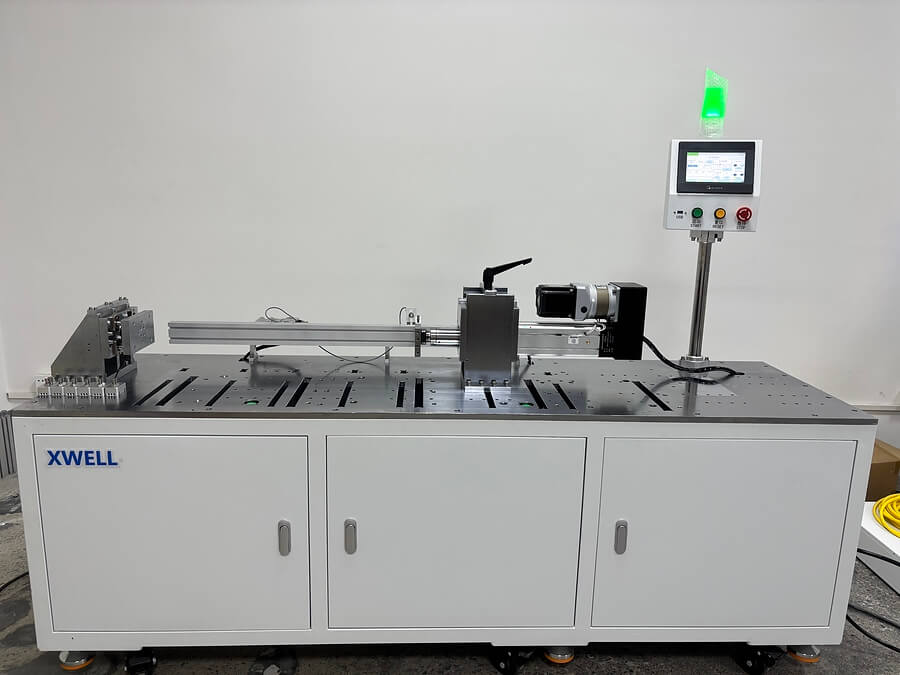
Prismatic Battery Compress Machine Prepared for Pakistan
The XW-PC12 is designed for prismatic battery module assembly. During production, multiple prismatic cells are placed into position and compressed to a defined length or pressure. This helps the battery pack manufacturer improve module consistency before processes such as fixing, banding, welding, busbar connection, or enclosure assembly.
For this shipment to Pakistan, the machine was prepared as a practical solution for battery pack assembly teams that need stable compression control, a clear operator interface, and a machine structure suitable for different prismatic battery module sizes.
Pre-Shipment Inspection and Function Check
Before packing, XWELL checked the machine condition, control interface, compression structure, and accessories. The XW-PC12 uses PLC control, a touch screen interface, servo motor and electric cylinder drive, and pressure sensing to help operators manage compression in a repeatable way.
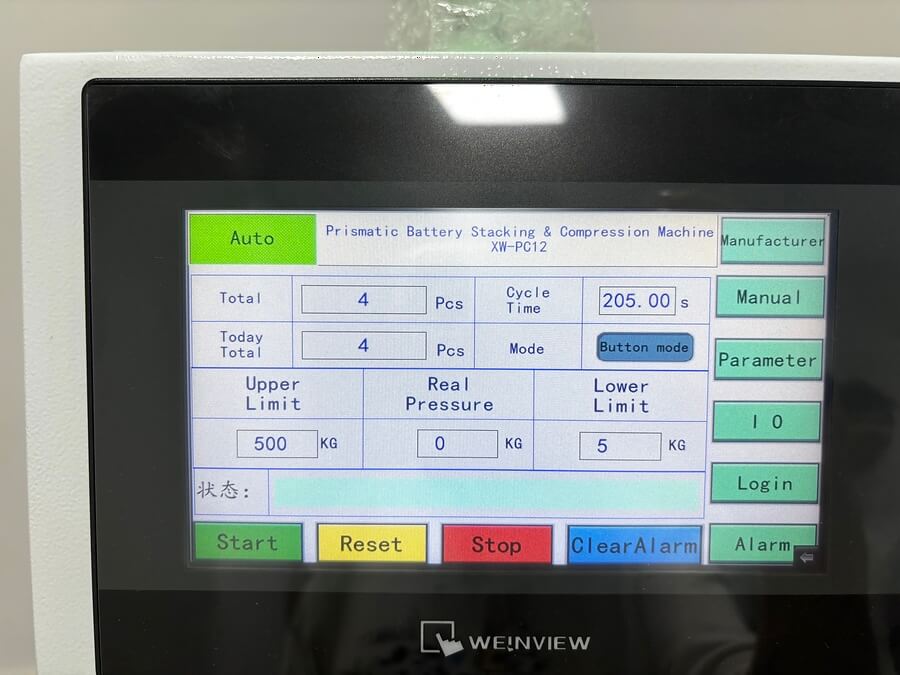
Key reference specifications for the XW-PC12 include a maximum compression length of 1200 mm, maximum compression pressure of 500 kg, pressure measurement accuracy of 0.1 kg, and position accuracy of 0.01 mm. These specifications make the machine suitable for controlled compression work in prismatic battery module and pack assembly lines.
Protective Packing for Overseas Delivery
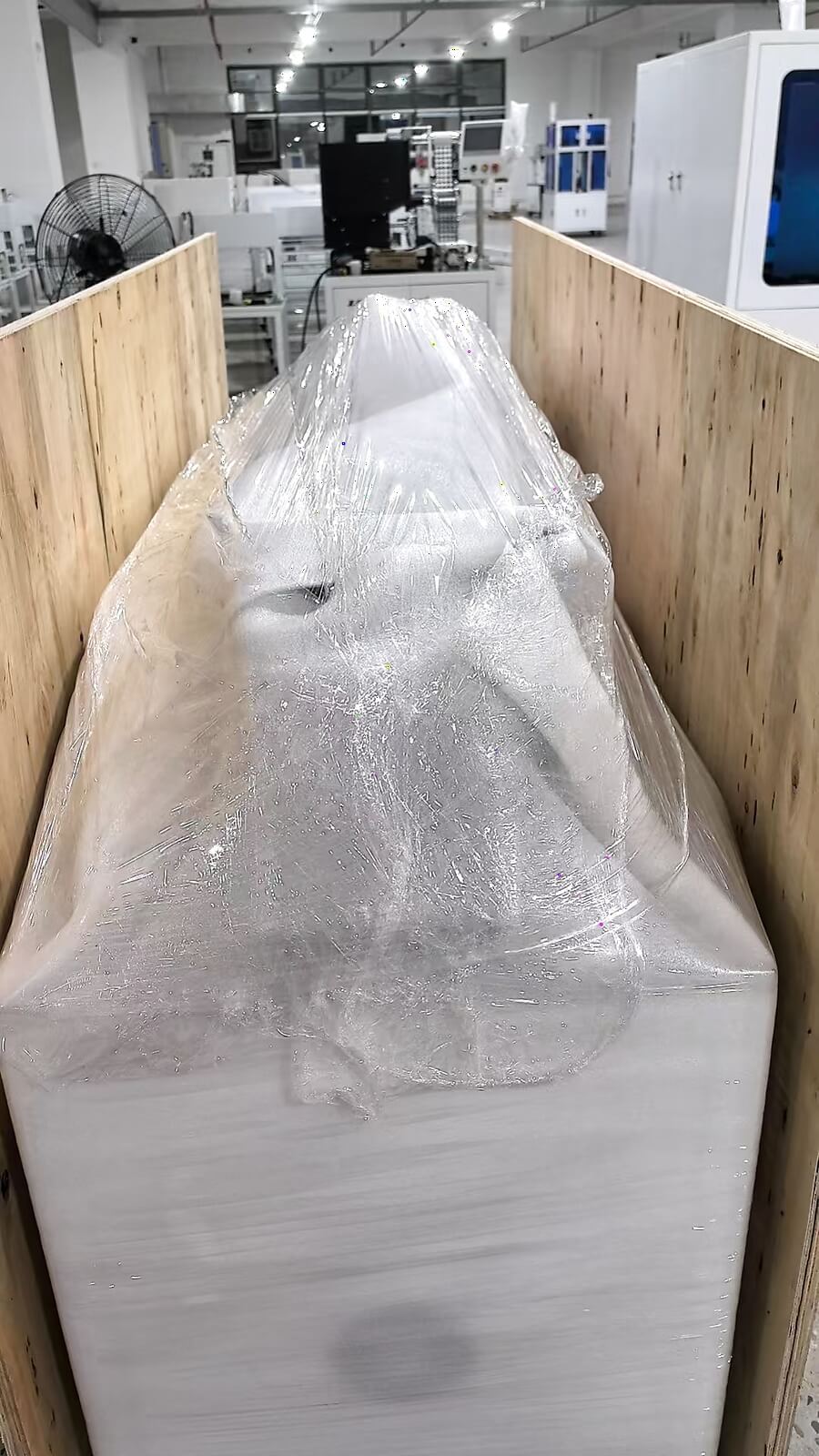
After inspection, the machine was protected with wrapping material and packed in a wooden case for international shipment. For export battery assembly equipment, packing quality is important because machines may pass through multiple handling points before reaching the final production site.
Why Prismatic Module Compression Matters
Prismatic cell modules usually require controlled positioning and compression before final assembly. If the pressure is unstable or the compression length is inconsistent, the downstream assembly process can become harder to control. A dedicated prismatic battery compress machine helps standardize this step and supports more reliable battery pack assembly.
For battery pack manufacturers, the main value is not only the compression force itself. The machine also helps operators set process targets, observe pressure feedback, and repeat the same compression conditions across different modules.
FAQ
What is a prismatic battery compress machine used for?
It is used to compress prismatic battery cells or modules to a preset length or pressure during battery module and pack assembly.
Why are pressure and length control important?
Controlled pressure and length help improve module consistency, support better cell alignment, and make downstream assembly steps easier to manage.
What battery applications can use the XW-PC12?
The XW-PC12 is suitable for prismatic battery module and battery pack assembly applications where controlled compression is required.
Can XWELL provide other battery assembly equipment?
Yes. XWELL provides battery assembly machines for cell sorting, spot welding, module assembly, battery pack testing, and related production processes.
About XWELL Battery Assembly Equipment
XWELL supplies battery assembly machines and supporting equipment for lithium battery pack manufacturers, laboratories, and production teams. For prismatic battery pack projects, XWELL can support equipment selection based on battery cell format, module size, process flow, and production requirements.