
LITFSI-CF1101 Lithium Bis(trifluoromethanesulfonyl)imide Battery Electrolyte Material
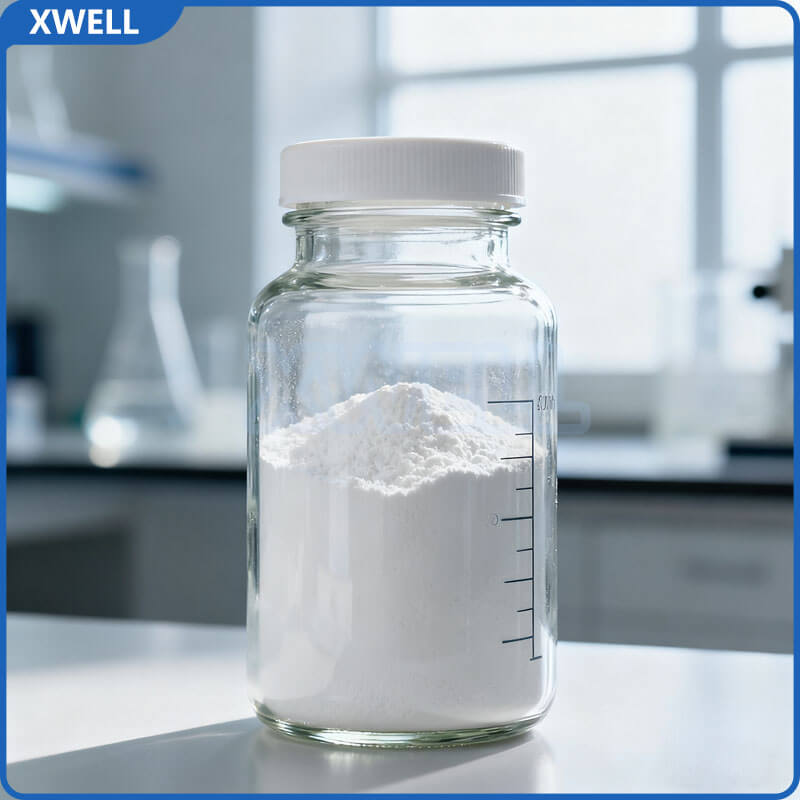
Model:(CF₃SO₂)₂NLi
Molecular Formula: Lithium Bis(trifluoromethanesulfonyl)imide
Molecular Weight:287.08
CAS Number:90076-65-6
Melting Point: White Powder
Specific Gravity:2.14 ~ 2.20
pH (10% Aqueous Solution):6-8
MOQ: 20g
Leading time: 5-8 working days
LITFSI-CF1101 Lithium Bis(trifluoromethanesulfonyl)imide Battery Electrolyte Material
Product Overview
Our LITFSI-CF1101 Lithium Bis(trifluoromethanesulfonyl)imide is a premium battery electrolyte material engineered for high-performance lithium-ion batteries (LIBs) and next-generation battery systems. With ultra-high purity (≥99.95%) and exceptional electrochemical stability, this product serves as a key lithium salt or additive in electrolytes, delivering superior ion conductivity, wide operating temperature range, and excellent compatibility with advanced electrode materials.
Key Features
-
Lithium bis(trifluoromethylsulfonyl)imide is mainly used in organic-system lithium batteries and antistatic agents. Thanks to the strong covalent bonds of its organic anion, it exhibits excellent thermal stability.
-
It is used in the lithium battery industry, with conductivity comparable to that of LiClO₄ and LiAsF₆—while eliminating concerns about stability and safety. When used as an additive salt in secondary lithium battery electrolytes, it can effectively improve the electrolyte’s performance.
-
It can also serve as a synthetic raw material for antistatic additive ionic liquids. These ionic liquids are compatible with various high-performance polymer materials, including thermoplastic and thermoset types.
Physical Property Data
| Physical Property Data | Details |
|---|---|
| Chemical Name | Lithium Bis(trifluoromethanesulfonyl)imide |
| Molecular Formula | (CF₃SO₂)₂NLi |
| CAS No. | 90076-65-6 |
| Molecular Weight | 287.08 |
| Melting Point | 236°C |
| Appearance | White Powder |
| pH (10% Aqueous Solution) | 6-8 |
Solubility
| Solvent | Solubility (w.t.%) |
|---|---|
| 1,3-Dioxolane (DOL) | 53 |
| γ-Butyrolactone (GBL) | 50 |
| Dimethoxyethane (DME) | 63 |
| Dimethyl Carbonate (DMC) | 68 |
| Ethyl Methyl Carbonate (EMC) | 61 |
| Propylene Carbonate (PC) | 46 |
Product Specification
| Parameter | Specification |
|---|---|
| Purity | ≥99.9% |
| Moisture | ≤200ppm |
| Turbidity (25wt.% DME Solution) | ≤10 |
| Color (10wt.% Aqueous Solution) | ≤30 |
| K/Ca | ≤5ppm |
| Na | ≤10ppm |
| Fe | ≤2ppm |
| Ni/Cr | ≤1ppm |
| Cl⁻ | ≤15ppm |
| F⁻ | ≤20ppm |
| SO₄²⁻ | ≤20ppm |
Product Transportation, Usage & Storage
- This product is safe for transportation when packaged intact.
- During transportation, protect it from water, moisture, and direct sunlight (note: “防爆晒” is commonly translated as “protect from direct sunlight” in logistics contexts, as “explosion-proof against sunlight” is not standard terminology).
- After opening the package, use the product in a glove box or a dry room with a dew point below -55°C.
- If the package is accidentally damaged by water, dispose of it immediately.
- Store in a cool, ventilated, and dry place. Shelf life is 12 months (unopened).